We write a lot here about buying less and keeping things longer, because that is where most of the environmental win actually sits. Jewellery is a good test case. The industry has a fast-fashion tier now: plated base metal, glued components, a season of wear before the plating goes and the whole thing is unrecyclable landfill.
The alternative is not necessarily expensive. It is just older-fashioned. Buy one thing, made by a person, from a material that does not degrade.
What Fire Agate Actually Is
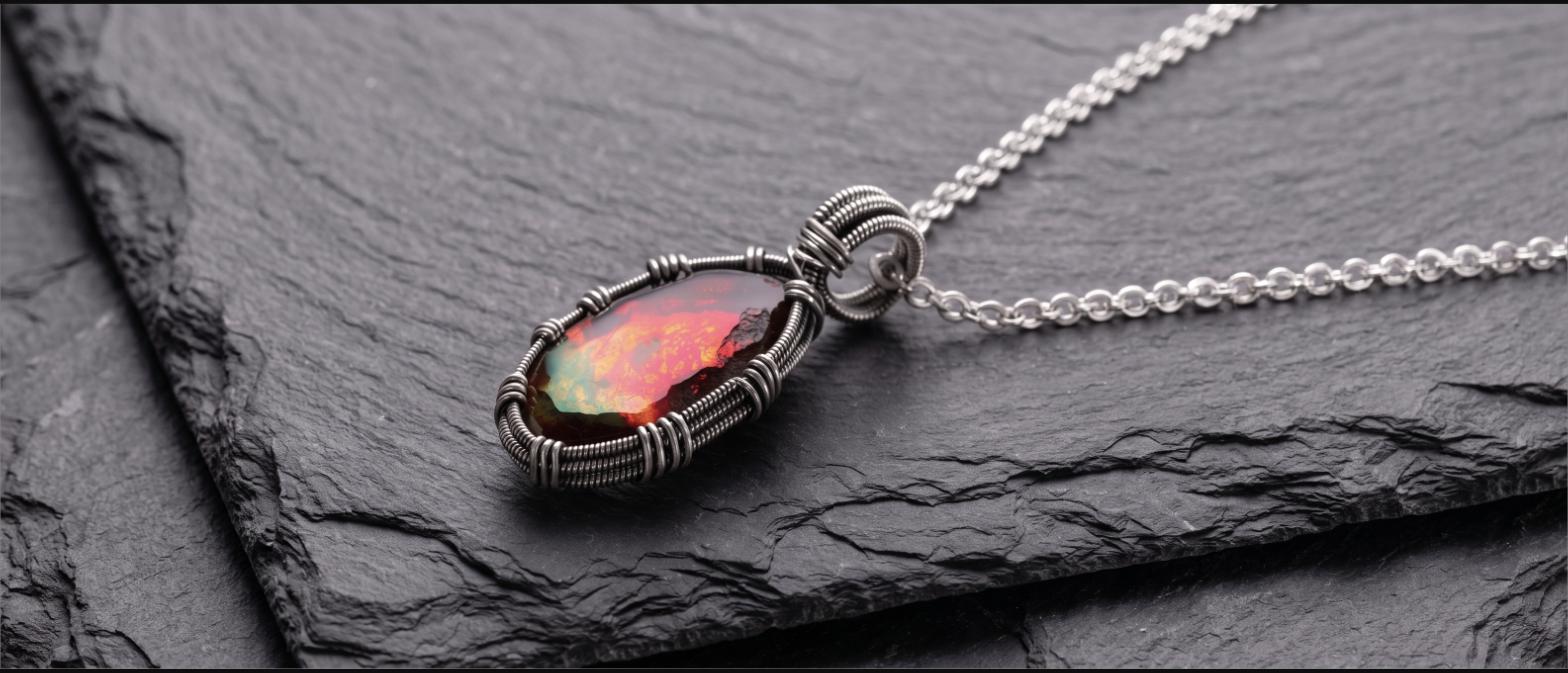
Fire agate is a variety of chalcedony, formed in volcanic rock in a narrow band across the American Southwest and northern Mexico. What makes it unusual is that its colour is not pigment. Thin layers of iron oxide inside the stone split light the way a soap bubble does, and the reds, golds and greens you see are interference patterns rather than dye.
That matters for a practical reason: the colour cannot fade, wash out or be bleached by sunlight, because there is nothing in there to fade. It is structural.
Why the Cutting Is the Hard Part
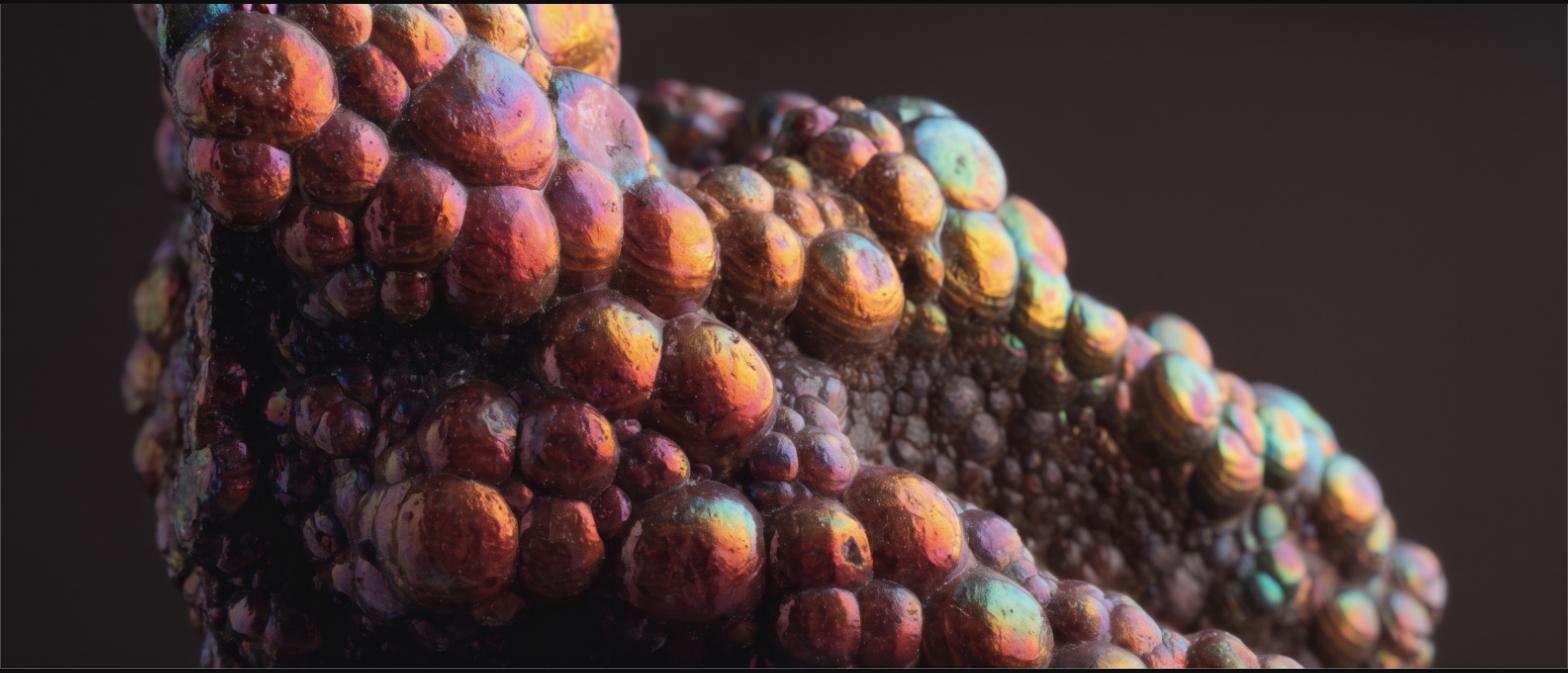
Most gemstones are cut to a formula. Fire agate cannot be, because the fire sits in layers that follow the stone’s bumpy internal shape. Cut too deep and you go straight through it; stop too early and it stays dull. The cutter has to grind down to the fire and then stop, following a surface they cannot see, and there is no undo.
That is why no two are alike and why a good one is worth having. It is also why this is a craft rather than a production line, which is the same argument we made about hand-carved decoys.

Watch: Fire Opal vs Fire Agate – What’s the Difference? (YouTube)
The Case for Buying One Good Piece
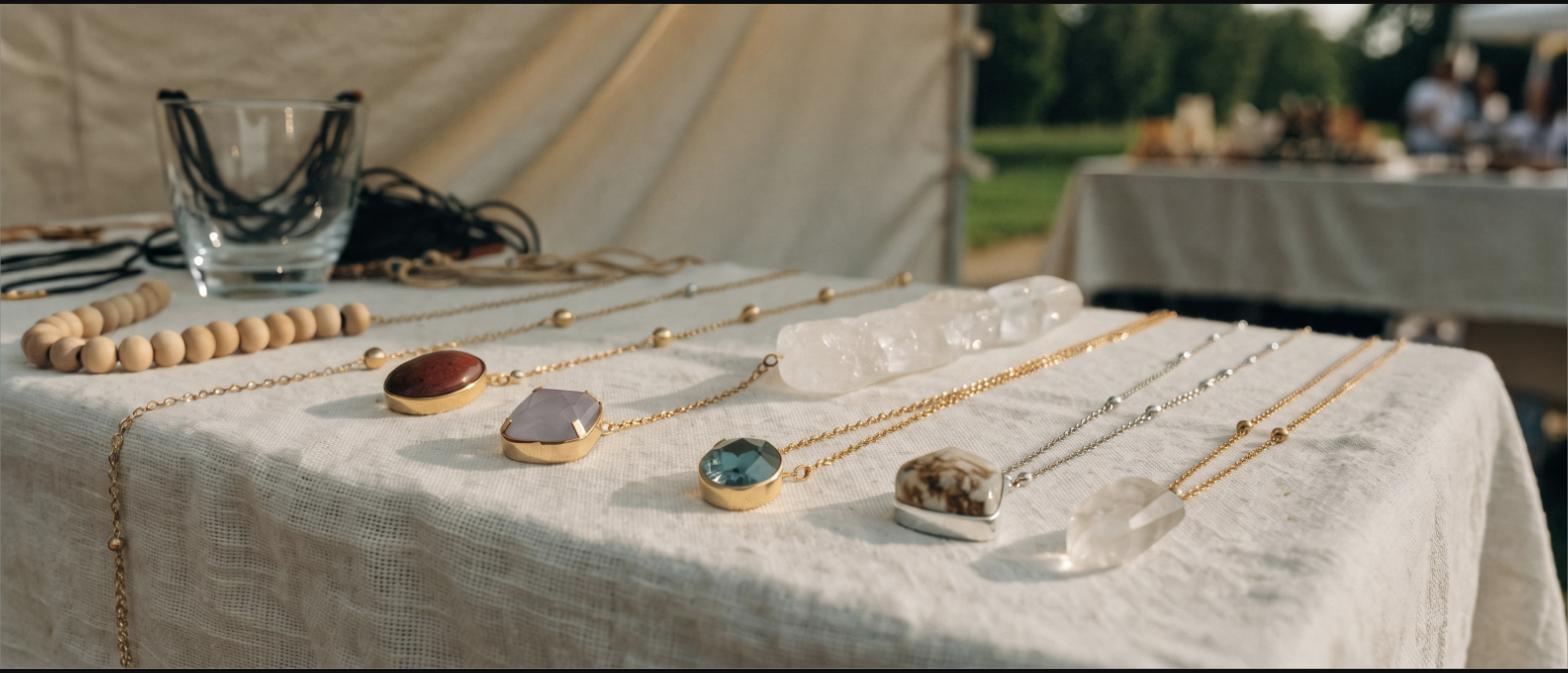
A wire-wrapped setting is worth understanding here. The stone is held by tension in shaped wire rather than glue, which means it can be re-wrapped, resized or reset decades later instead of being thrown away when a glue joint fails. Sterling silver is endlessly recyclable and holds its value. Nothing in that assembly is designed to become waste.
Compare that to a plated fashion piece, which cannot be repaired, cannot be economically recycled, and was never meant to last. A hand-cut fire agate necklace sits at the other end of that spectrum: one object, one maker, no expiry date.
Questions Worth Asking
Ask where the stone came from. Fire agate is mostly dug by small-scale claim holders in Arizona and Mexico rather than by industrial operations, and a seller who cannot name the locality probably has not looked. Ask whether the silver is recycled, since most refiners now offer it. Ask whether the piece can be repaired.
A maker who works this way will happily answer all three. That conversation is the whole point, and it is one you will never have with a shop that sells the same necklace ten thousand times.